The project goal was to shorten and streamline the integration process to help increase the company’s annual revenue.
Integration Hub
Riskified’s integration process is tailor-made for each merchant onboarded. Because checkout flows vary widely across industries and businesses, the onboarding process can take up to six months, requiring significant resources from both Riskified’s internal teams and the merchant’s teams. During this period, Riskified does not charge the merchant and only gets paid once the integration is fully complete.
📀 Product Design
Riskified
The Issues & Opportunities
Unpredictable, lengthy, and friction-filled integration process, especially for enterprise and mid-market segments
Merchant integration breakdown
A new CHBG integration takes an average of 14 weeks
📆
⏰
Excessive back-and-forth, causing friction and delays
🪃
More than 90 working hours are required from internal teams
Business Goal
25%
Reduce integration time to 9 weeks by the end of 2024
66%-83%
Achieve 2–4 weeks in the long run
$ ~500K
Significant revenue gains per year
User Impact Goal
Tailoring the Solution: Understand business needs and flows by engaging in discussions with account managers and top merchants. The aim was to identify the user’s primary concerns and priorities. Through conversations and user testing, we sought to uncover critical business unknowns before delivering a solution.

Defining Personas
-
(Merchant Side)
The project manager usually has an engineering background (though not always). They typically use the system to gain a clear overview of where the process stands. -
(Merchant Side)
The engineer is hands-on with the project but usually juggles many other tasks. They need clear and complete information to successfully carry out their work. If they get stuck and have to switch to other tasks, it can cause major delays. -
Integration engineers and data integrity teams are responsible for creating sandbox and production environments, and for guiding and communicating both externally and internally throughout the entire integration process.
What do we need to validate? How does an integration request appear on our side versus the user’s side? Who are the stakeholders and how do they communicate? What conversations and data can we review to identify the major delays?
Research & Ideation
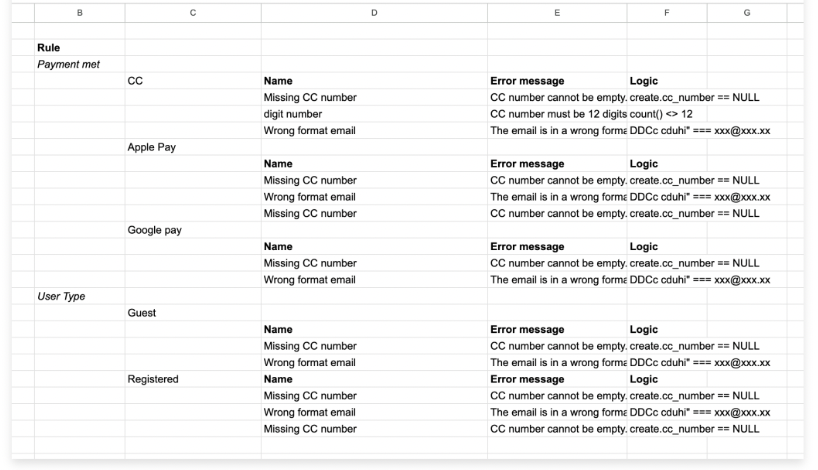
After analyzing the lengthy communication and work process, we decided to start with the most time-consuming stage - sandbox testing integration - in order to deliver the greatest value.
Flow Mapping

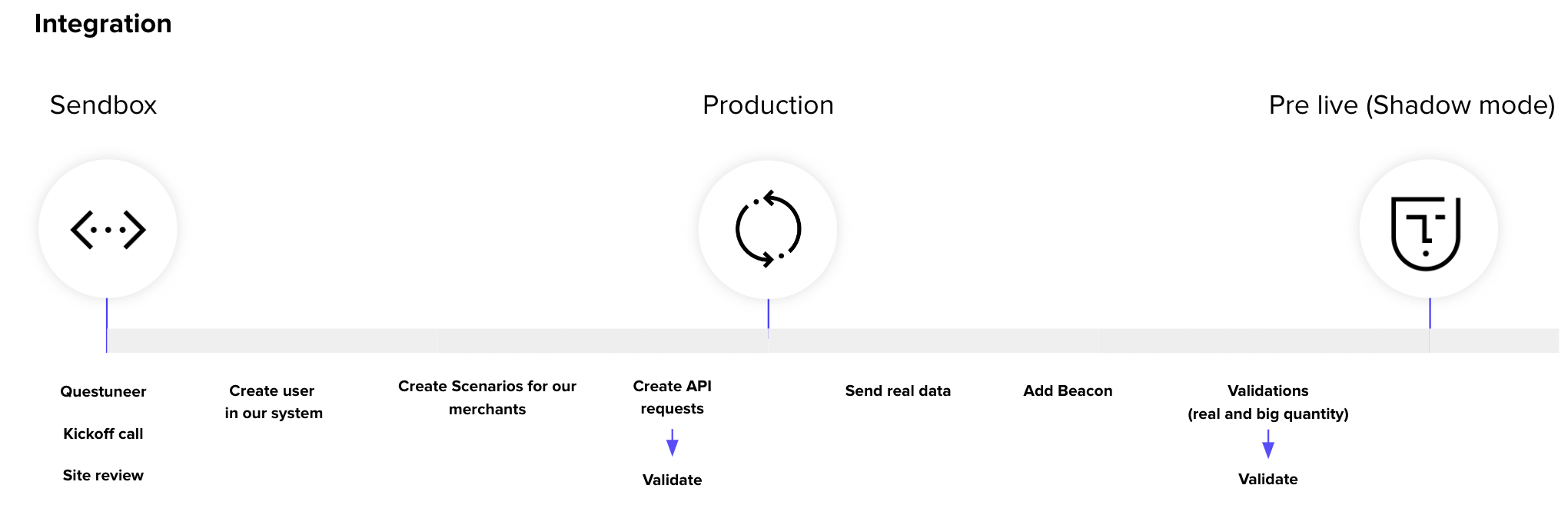
Solution
External

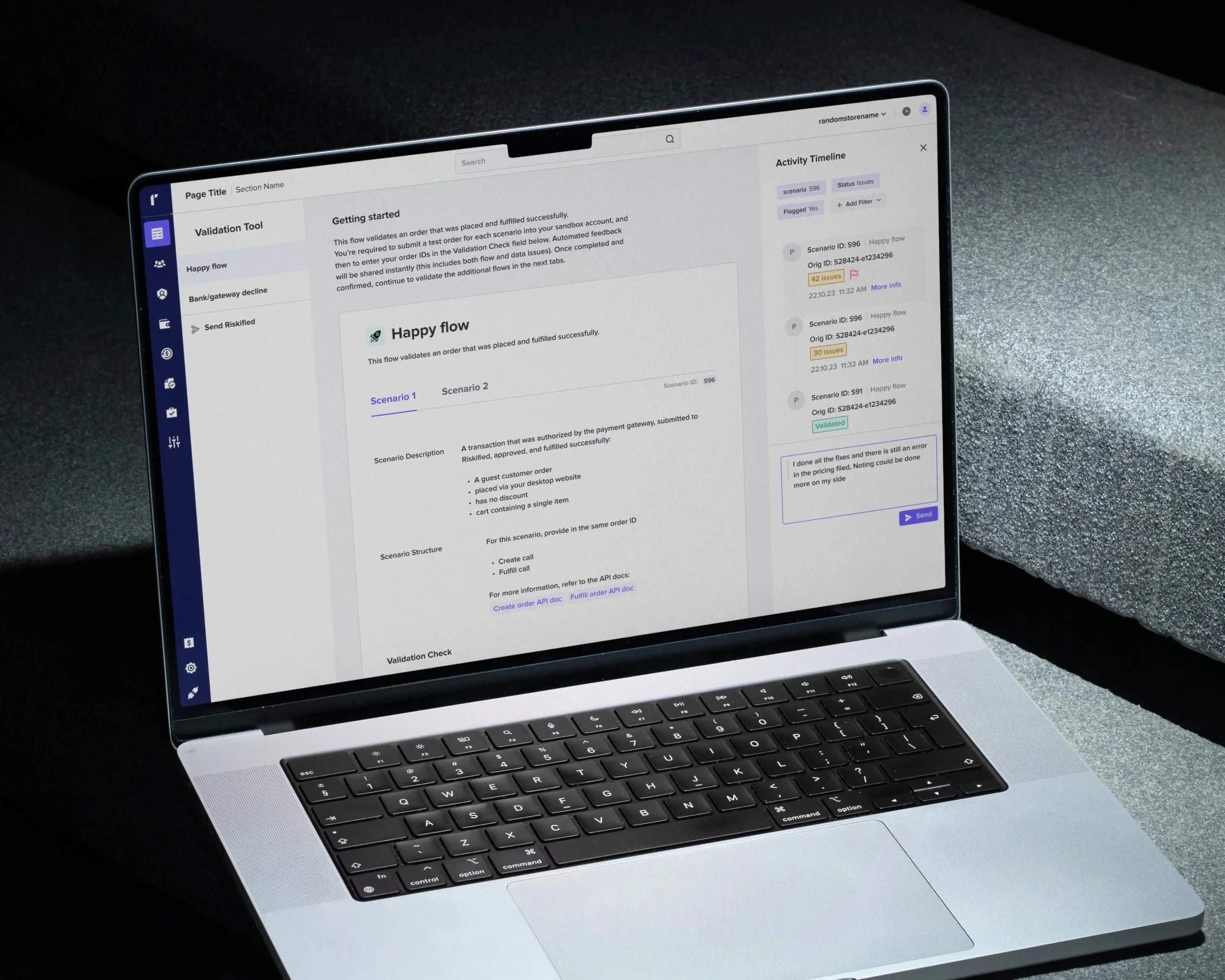
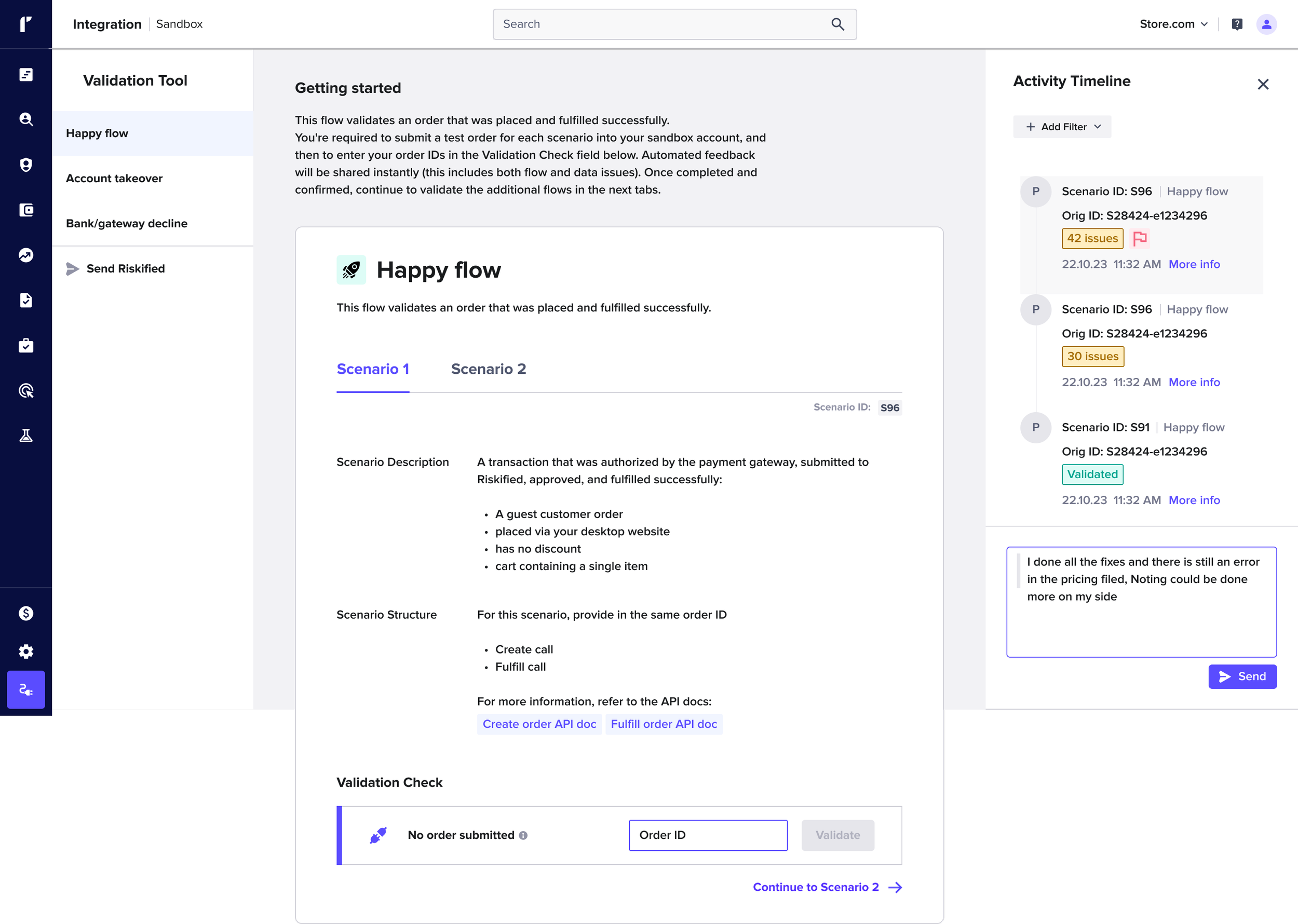
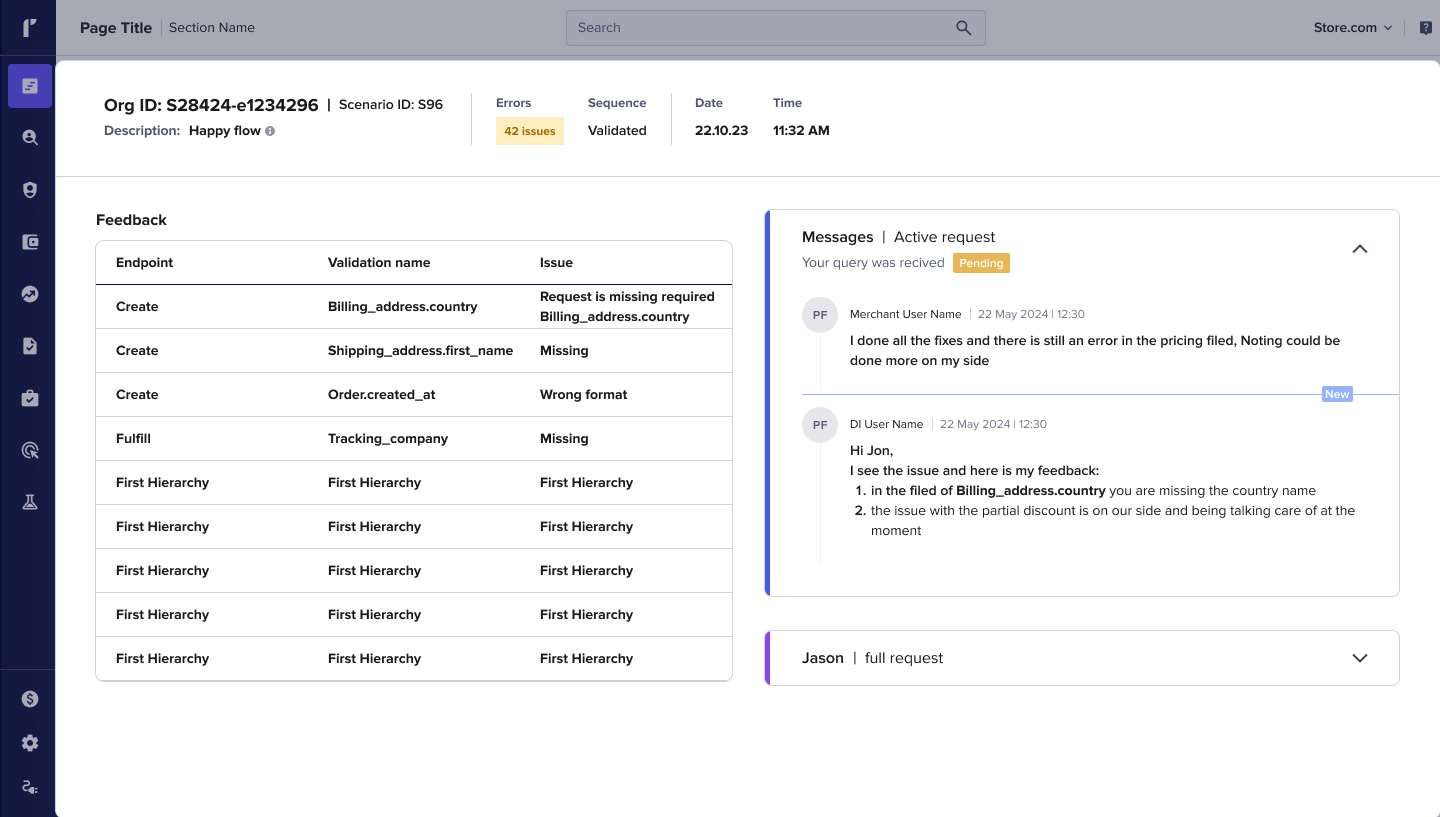
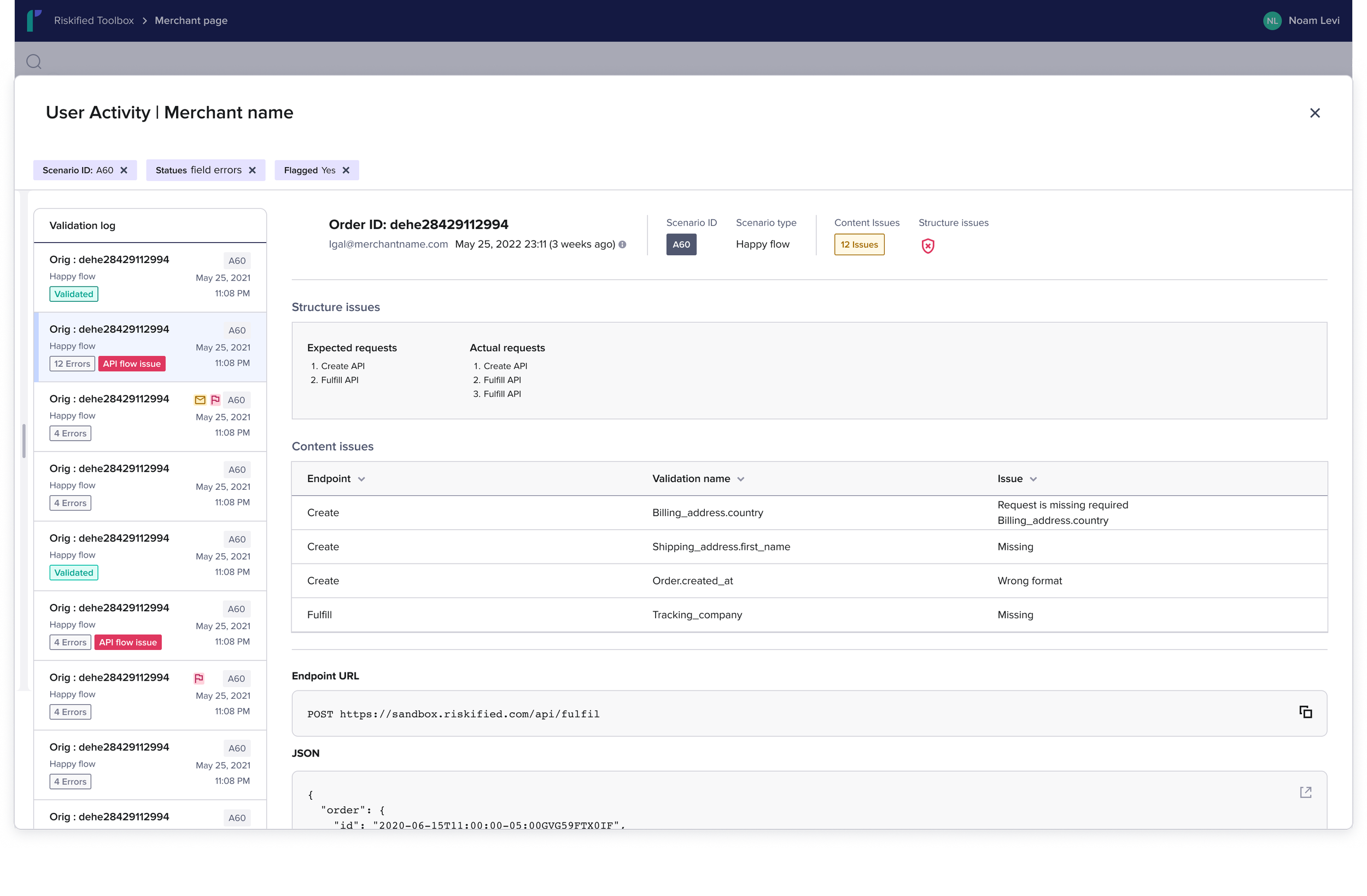
The Integration Hub is now embedded within the Control Center in a sandbox environment. Merchant developers can simulate various order scenarios, send orders to Riskified via API, and receive instant feedback. This enables them to fix structure and content errors immediately, without waiting for Riskified’s team to respond. The Hub also includes logs and an option to contact the team about specific events.

Internal
The backend of the Control Center now features two key tools:
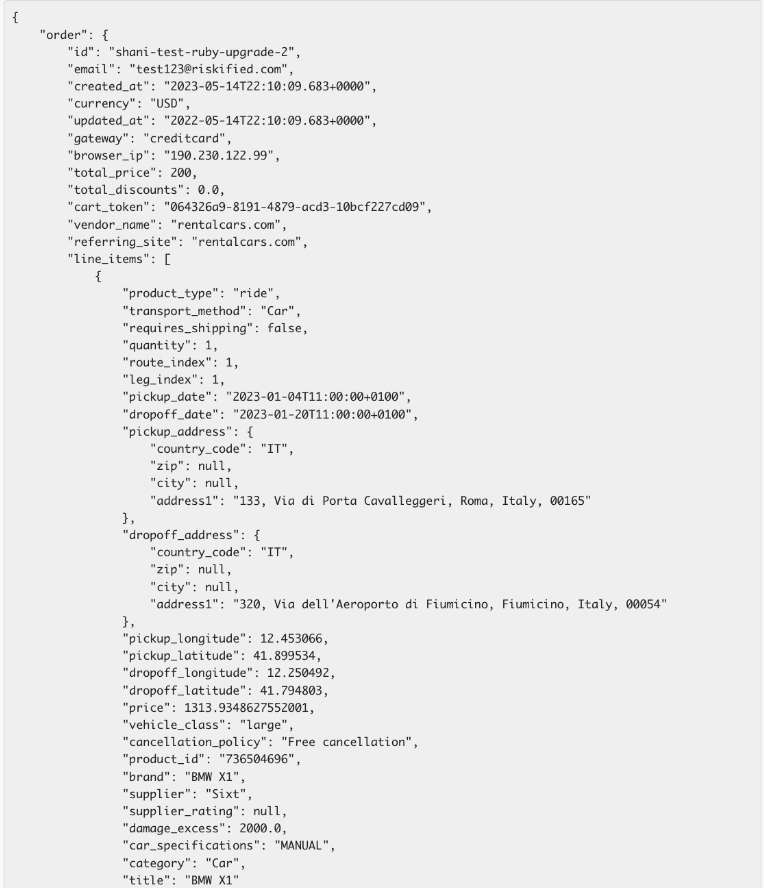
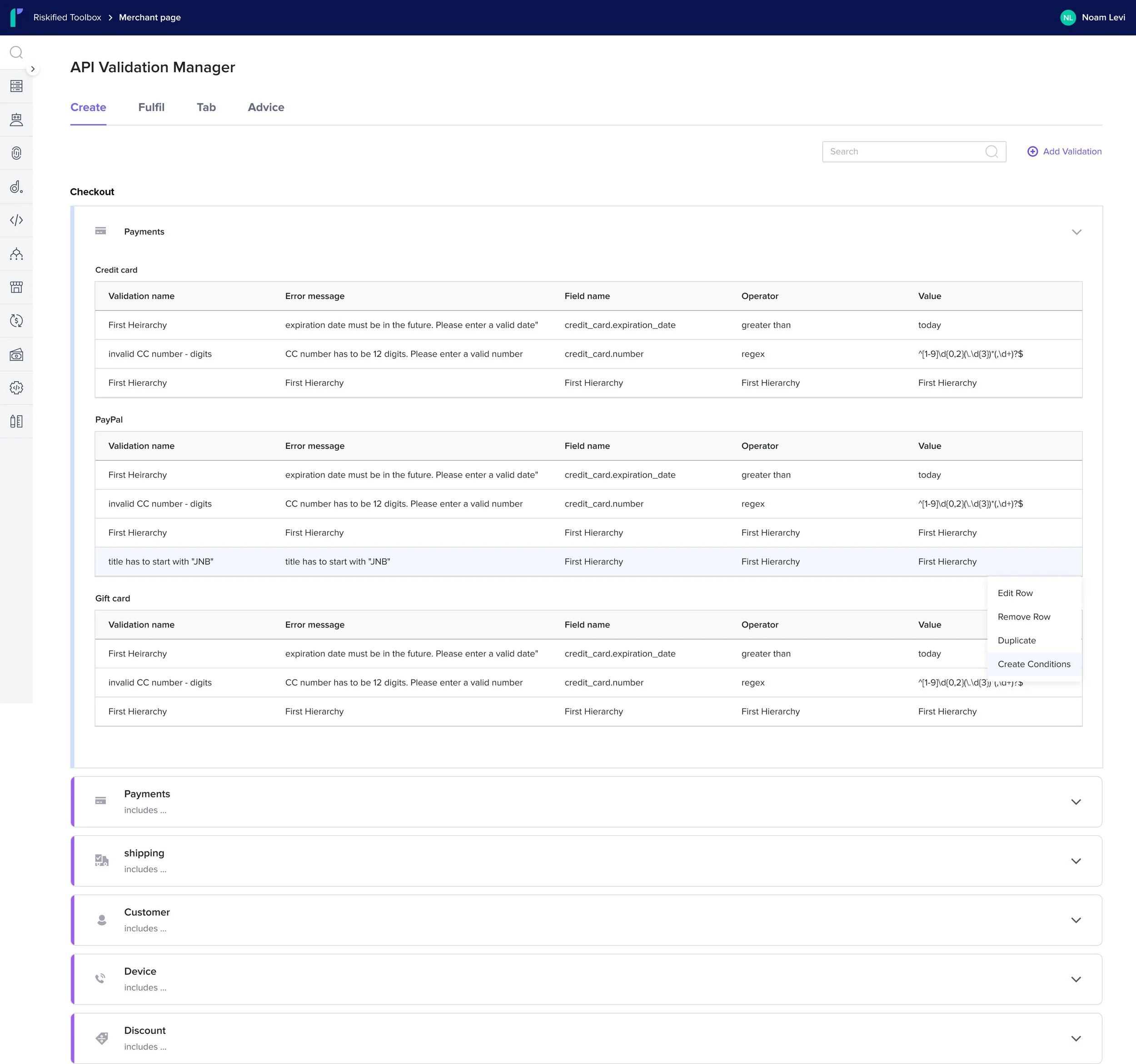
Integration Fields Bank – a repository of all the integration fields Riskified requires
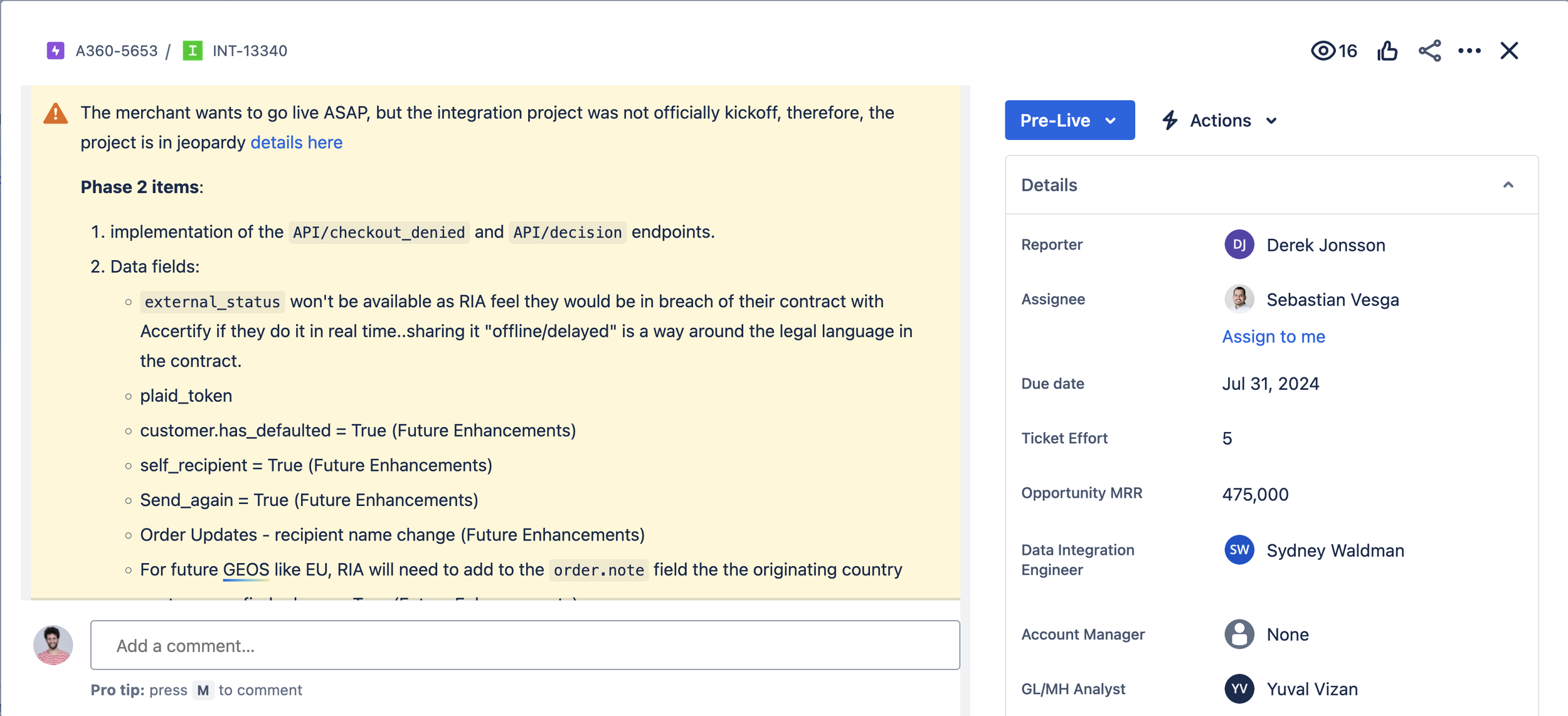
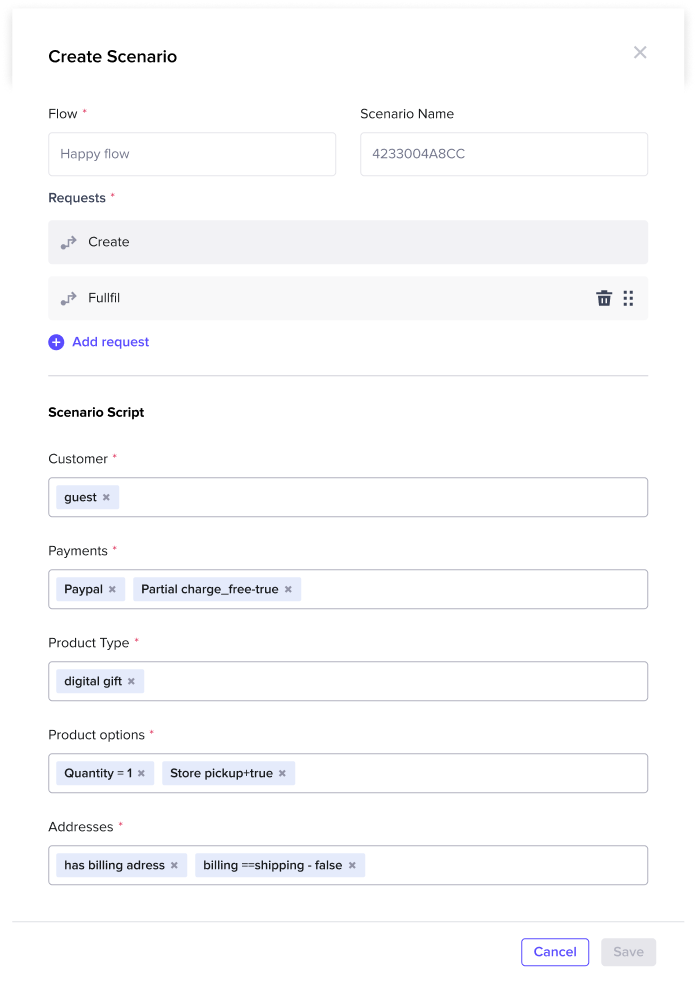
Scenario Page – a tool for integration engineers to create specific scenario scripts for merchants and track their progress in the Control Center
Thanks to these tools, we’ve already seen significant improvements in integration time, with some recent integrations completed in just over a month. Research for future improvements is ongoing.
Integration Fields Bank
Scenario Pag

Progress tracker
Next steps
WIP
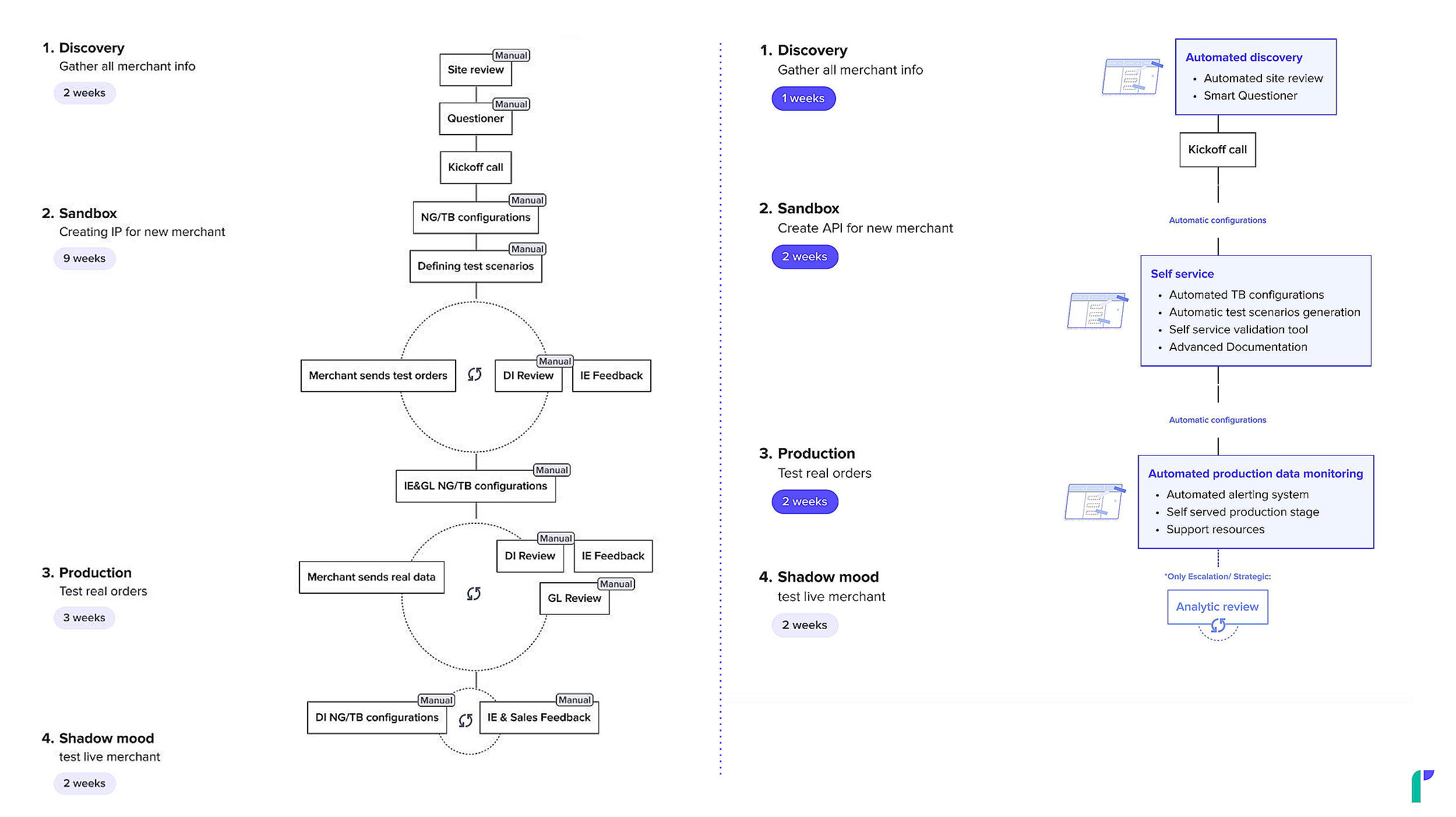
On the left is the current flow, and on the right is the proposed vision: a streamlined blend of self-service and automation that manages the entire integration process.